


Your customer only sees one thing: the service either works or it does not. They do not care whether the problem sits in your cloud setup, payment gateway, CDN, data center, or vendor contract. They just want access.
EU DORA is built around that simple truth. In finance, digital failure is not just an IT problem. It is a trust problem. And trust, sadly, does not come with a refresh button.
Key Takeaways
- EU DORA is the EU rulebook for digital resilience in the financial sector.
- The Digital Operational Resilience Act has applied since 17 January 2025.
- DORA compliance means you must prove that your systems, controls, vendors, and recovery plans actually work.
- DORA ICT risk covers your own technology and the outside providers you depend on.
- ICT risk management is not only an IT task. Leadership must understand the risk and stay involved.
What Is EU DORA?
EU DORA stands for the Digital Operational Resilience Act. It is an EU regulation that tells financial firms how to manage digital risk, handle technology incidents, test resilience, and control ICT provider relationships.
EU DORA asks you a few hard questions:
- Do you know which systems support your key services?
- Can you spot and report a serious ICT incident quickly?
- Have you tested your recovery plans, or are they just very confident documents?
- Do you know what your ICT providers are doing behind the scenes?
That is the core idea. DORA compliance is not about looking secure on paper. It is about being able to keep financial services running when systems fail, attacks happen, or a provider has a bad day.
{{cool-component}}
Who EU DORA Applies To And What It Requires
EU DORA applies to a wide range of financial entities. This can include banks, payment firms, insurers, investment firms, crypto asset service providers, trading venues, credit rating agencies, and other financial sector businesses.
It also matters for ICT providers that serve these firms. That means cloud providers, data services, software vendors, managed service providers, and infrastructure providers may all feel the impact through contracts and due diligence.
The logic is simple:
- If your service depends on technology, that technology creates business risk.
- If outside providers help run that technology, those providers create business risk too.
- If regulators ask for proof, “we trust the vendor” is not a strong answer.
Financial institutions need clear policies, tested controls, incident records, provider registers, risk reviews, and recovery plans. Senior leaders also need to understand the risk. DORA does not let the board sit in the back row with popcorn.
The Five Pillars Of The Digital Operational Resilience Act
DORA is often explained through five main pillars. Each one pushes you to move from vague comfort to clear proof.
1. ICT Risk Management
This is the foundation. You need to identify your systems, map your assets, understand your risks, and protect the services that matter most.
Your logic should be:
- What service are we protecting?
- What technology supports it?
- What could break?
- Who owns the fix?
Good ICT risk management helps you stop guessing. It gives you a living view of your digital risk, not a dusty file that only appears before an audit.
2. ICT Incident Reporting
You need a process for spotting, classifying, escalating, and reporting major ICT incidents.
This matters because regulators do not want to hear about a serious outage long after customers have already started shouting online. You need clear timelines, clear owners, and clear records.
The goal is not panic. The goal is control.
3. Digital Operational Resilience Testing
DORA expects you to test your systems and controls. That may include vulnerability testing, scenario testing, continuity testing, and advanced testing for firms with higher risk.
The logic is very practical. A plan that has never been tested is more like a wish with formatting.
You need to test what happens when systems fail, users lose access, attackers get noisy, or a key provider stops responding.
4. ICT Third Party Risk Management
This is one of the biggest parts of DORA. You remain responsible for your service even when an outside provider supports it.
That means you need to review contracts, understand subcontracting, check security duties, monitor performance, and plan exits.
For every important provider, ask:
- What service do they support?
- What data or access do they have?
- How fast must they tell us about incidents?
- How do we leave if the relationship becomes too risky?
This is where DORA ICT risk becomes very real. The risk is not only inside your walls. It may be sitting in someone else’s platform.
5. Information Sharing
DORA also supports cyber threat information sharing between trusted financial entities.
The idea is simple. If one firm sees a serious threat, others may need the warning too. Shared intelligence can help the sector respond faster and avoid repeat damage.
Of course, sharing must still protect sensitive data. You are sharing threat insight, not handing out the house keys.
{{cool-component}}
How CDN And Edge Infrastructure Fit Into DORA ICT Risk Requirements
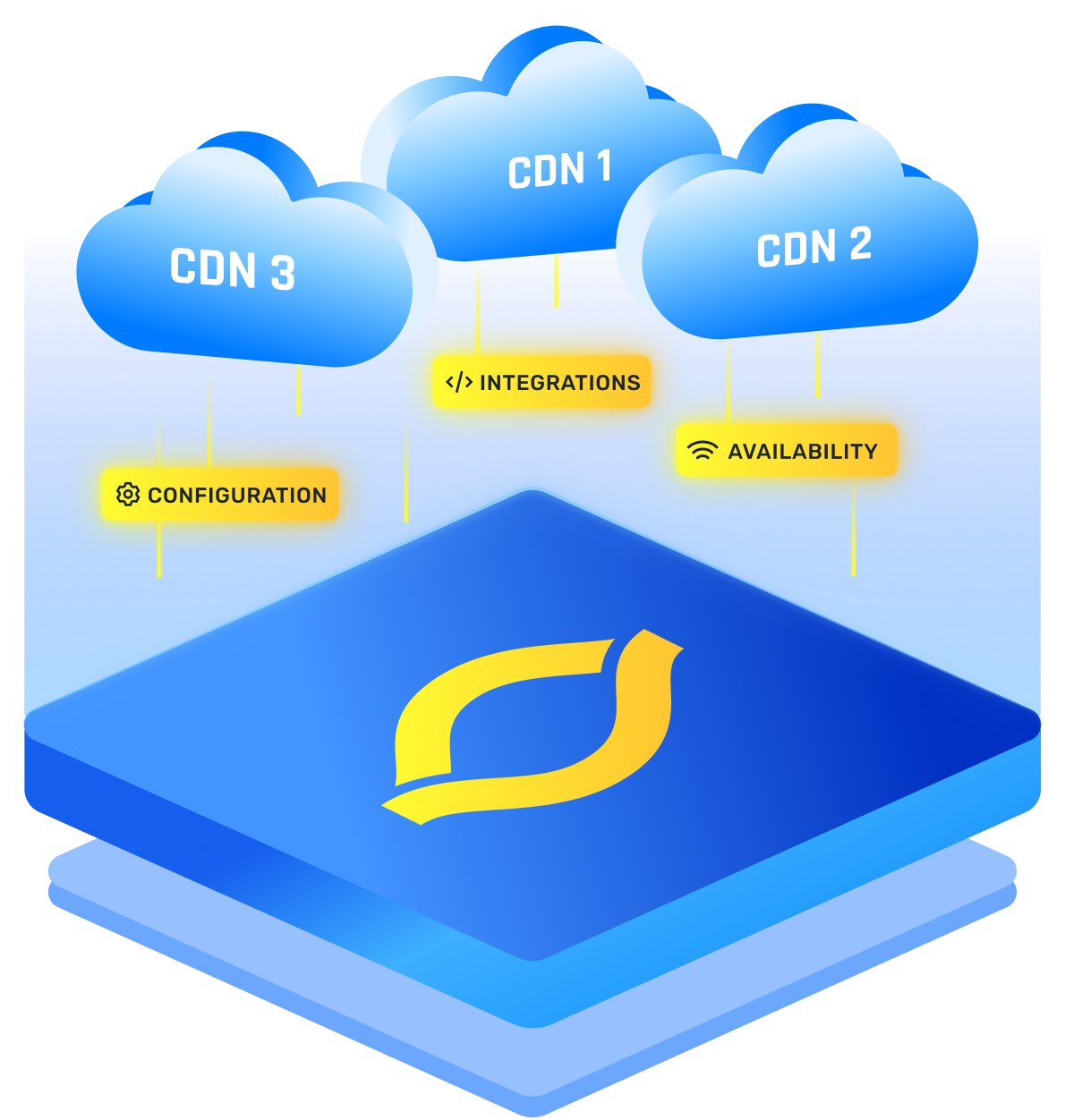
A CDN or edge platform may look like a performance tool. Under EU DORA, it can be more than that.
It may help route traffic, block attacks, protect APIs, support login flows, deliver customer portals, or keep services available during demand spikes.
If it supports a critical or important financial function, it belongs in your ICT risk review.
You should ask:
- What financial services depend on this CDN or edge provider?
- What happens if the provider fails?
- What security controls does the provider operate?
- Can we switch, bypass, or recover if needed?
Not every CDN provider will be treated as a critical ICT third party provider. But you still need to manage the risk. DORA compliance cares about dependency. If your customer journey breaks when the provider breaks, regulators will expect you to know that before the outage does the explaining.
What Financial Institutions Need To Do Now For DORA Compliance
DORA enforcement is already here, so the smart move is to focus on evidence. You do not need theatre. You need proof.
1. Map Your Important Services
Start with the services that matter most to customers and regulators. Then connect each service to the systems, vendors, data flows, and teams behind it.
The logic: you cannot protect what you have not mapped.
2. Rank Your ICT Risks
Not every system has the same impact. Focus on services that support critical or important functions.
The logic: high impact services deserve deeper testing, stronger monitoring, and better recovery planning.
3. Review Your ICT Provider Contracts
Check your contracts for audit rights, incident notice duties, security requirements, subcontracting controls, continuity support, and exit help.
The logic: if the contract is weak, your control is weak too.
4. Build A DORA Evidence File
Keep your policies, risk assessments, board updates, test results, incident logs, provider reviews, and remediation actions in order.
The logic: DORA compliance is easier when you can show your work without searching through six folders called “final final.”
5. Test Your Failure Paths
Run practical exercises for outages, cyber attacks, provider failures, and recovery delays.
The logic: testing shows where your plan is strong and where it is just wearing a nice suit.
6. Keep Leadership Involved
Give leaders simple, regular updates on ICT risk. Show what matters and what still needs investment.
The logic: DORA expects accountability at the top, not only in the IT team.
Conclusion
EU DORA is not asking you to become perfect. It is asking you to become clear, tested, and accountable.
Start with your most important services. Map the technology behind them. Review the providers that support them. Test what happens when things go wrong. That is how you turn DORA ICT risk from a scary compliance phrase into a working resilience plan.
FAQ
Does EU DORA Apply To Companies Headquartered Outside The European Union?
Yes, it can. EU DORA can affect a company outside the EU when it provides ICT services to an EU financial entity or supports services offered in the EU. You may not meet the regulator first, but your contract will probably introduce you. That is where DORA duties start to show up.
How Does DORA Define A Critical ICT Third Party Provider And What Obligations Does That Classification Trigger?
Under DORA, a provider may be classed as critical when many financial entities depend on it and replacing it would be difficult, especially if it supports critical or important functions. That status brings EU oversight, cooperation duties, information requests, and possible penalties if the provider ignores obligations.
What Is The Difference Between DORA Compliance And General Cybersecurity Compliance Frameworks Like ISO 27001 Or NIS2?
DORA compliance is built for financial resilience, not just general security hygiene. ISO 27001 helps you manage information security. NIS2 covers wider essential and important sectors. DORA focuses on financial services, board accountability, incident reporting, resilience testing, ICT provider contracts, and the messy question of whether your service still works under stress.


