

How to Defend Against Application Layer DDoS Attacks
A customer tells you the website feels slow. A few minutes later another report arrives. Your monitoring shows normal bandwidth, but response times keep climbing. Login pages hesitate, search requests take longer, and your servers are working harder than expected.


Nothing looks like a classic flood, yet users cannot complete simple tasks. That is often how an application layer DDoS attack begins. It quietly attacks the part of your system that creates value for your users.
Key Takeaways
- An application layer DDoS attack targets your web application instead of your network connection.
- A layer 7 DDoS attack often looks like normal web traffic, making detection more difficult.
- Expensive pages, APIs, login forms, and search functions are common targets.
- Effective layer 7 DDoS mitigation combines edge protection, application security, monitoring, and response planning.
- Multi-CDN architecture improves resilience by giving you more routing and failover options during an attack.
What Makes Application Layer DDoS Attacks Different From Volumetric Floods
A traditional DDoS attack tries to overwhelm your network with massive amounts of traffic. The goal is simple. Fill the available bandwidth until legitimate users cannot connect.
An application layer DDoS attack works differently. Instead of attacking the network, it attacks the application itself. The attacker sends requests that force your servers to perform expensive work. Each request may appear completely valid.
This difference is important because applications perform many tasks behind every request. They may query a database, check user permissions, create sessions, search records, or generate dynamic content. Those operations consume processor time, memory, and database resources.
- Volumetric flood: Primary Target: Network capacity; Main Goal: Consume bandwidth
- Application layer attack: Primary Target: Web application; Main Goal: Consume application resources
A layer 7 DDoS attack may generate far less traffic than a network flood while causing equal or greater disruption. Your internet connection may still have available capacity, yet users experience slow pages, failed requests, and growing delays because the application itself has become overloaded.
The Most Common Application Layer Attack Techniques and How They Work
Attackers usually focus on requests that cost your application more to process than they cost to send.
One common method is an http flood attack. Instead of sending unusual traffic, attackers repeatedly request normal pages or API endpoints. The requests often look legitimate, making simple filtering much less effective.
Login pages are popular targets because every request may trigger password validation, session creation, logging, and database access.
Search functions are another favorite because they often require expensive database queries. Product filtering, account lookups, and reporting tools can create similar pressure.
Dynamic API endpoints are also attractive. APIs frequently process business logic instead of serving cached content. Repeated requests can quickly consume application resources.
Attackers also try to bypass caching. A CDN normally serves cached content without contacting the origin server. By changing query parameters, requesting unique URLs, or modifying request details, attackers encourage the CDN to forward requests back to the application.
Some attacks focus on keeping server connections open for longer periods. Others repeatedly request files that cannot be cached. The goal stays the same. Force the origin infrastructure to perform unnecessary work until legitimate users begin experiencing delays.
Modern attackers also spread requests across many systems instead of sending everything from one location. Individual request rates may appear reasonable, while the combined traffic slowly overwhelms the application.
The result is uneven effort. The attacker spends very little computing power while your application performs significantly more work for every request it accepts.
Why Application Layer Attacks Are Harder to Detect Than Network-Layer Floods
Application attacks are difficult because they resemble normal user behavior.
Every visitor sends HTTP or HTTPS requests. Attackers do exactly the same thing. They may use valid browsers, realistic headers, accepted protocols, and normal looking navigation patterns.
Encrypted traffic adds another challenge. HTTPS protects user privacy, but security systems must inspect encrypted requests before they can evaluate them. That inspection itself requires processing.
Attackers also change their behavior during an attack. They may rotate IP addresses, distribute requests across many devices, or slowly increase traffic over time instead of creating one obvious spike.
Simple traffic volume therefore tells only part of the story.
A successful marketing campaign can increase requests. A software update can create additional login activity. Seasonal events can generate heavier workloads. Looking only at request counts can produce false alarms or hide real attacks.
Instead, you need to understand behavior.
Legitimate users usually browse different pages, download supporting resources, and complete meaningful actions. Malicious traffic often repeats the same expensive request, abandons sessions, creates abnormal error patterns, or repeatedly targets one application feature.
The challenge is separating unusual activity from harmful activity without interrupting real users.
How to Detect an Application Layer DDoS Attack Before It Causes Damage
Good detection starts long before an attack begins.
First, establish a baseline. Learn how your application behaves during quiet periods, busy periods, product launches, and routine business cycles. Without a baseline, unusual behavior becomes much harder to recognize.
Monitor several signals together instead of relying on one metric.
- Request rates for individual endpoints
- Response time and application latency
- Database performance and resource usage
- Cache hit rates and origin requests
Watch for sudden changes in expensive application functions. Login pages, search features, checkout processes, reporting tools, and APIs deserve extra attention because they often require more processing than static content.
Compare edge data with origin data whenever possible. If the CDN receives many requests but only a few reach the origin, edge protections are working. If origin traffic suddenly increases while cache performance falls, attackers may be bypassing cached content.
Application logs also provide valuable clues. Repeated requests to one endpoint, abnormal request patterns, failed authentication attempts, or rapidly growing server queues often indicate that something unusual is happening.
Automated alerts should focus on changes rather than fixed numbers. Normal traffic varies throughout the day. Relative changes often reveal attacks sooner than absolute thresholds.
Finally, practice your response process. During an incident, your team should know how to review logs, adjust security rules, verify application health, and confirm whether mitigation measures are improving performance.
The Defense Layers That Stop Application Layer DDoS Attacks
No single security control stops every application attack. Strong protection comes from multiple defensive layers working together.
A CDN provides the first layer. It distributes traffic across edge locations, serves cached content close to users, and reduces unnecessary requests reaching the origin. Good caching lowers the amount of work your application performs during both normal operation and attacks.
A web application firewall inspects incoming HTTP requests. It applies security rules, blocks suspicious requests, and filters known attack patterns before they reach the application.
Bot management adds another important layer. Many application attacks rely on automated tools rather than human users. Behavioral analysis helps distinguish legitimate visitors from automated traffic without depending only on IP addresses.
Rate limiting controls how frequently clients perform expensive actions. Login pages, search endpoints, APIs, account recovery functions, and other resource intensive operations often benefit from carefully designed limits.
Origin protection is equally important. Restrict direct access so requests reach the application only through approved edge services. This prevents attackers from bypassing your primary defenses.
Inside the application, reduce unnecessary work wherever possible. Improve caching, optimize database queries, limit request sizes, define reasonable timeouts, and prevent one request from consuming excessive resources.
Monitor downstream services as well. Identity providers, payment systems, databases, and third party APIs may become bottlenecks even when the web servers remain healthy.
Regular testing strengthens every layer. Review configurations, validate monitoring, practice response procedures, and confirm that security controls continue working after infrastructure changes.
Successful layer 7 DDoS mitigation depends on coordinated protection rather than one product or one security rule.
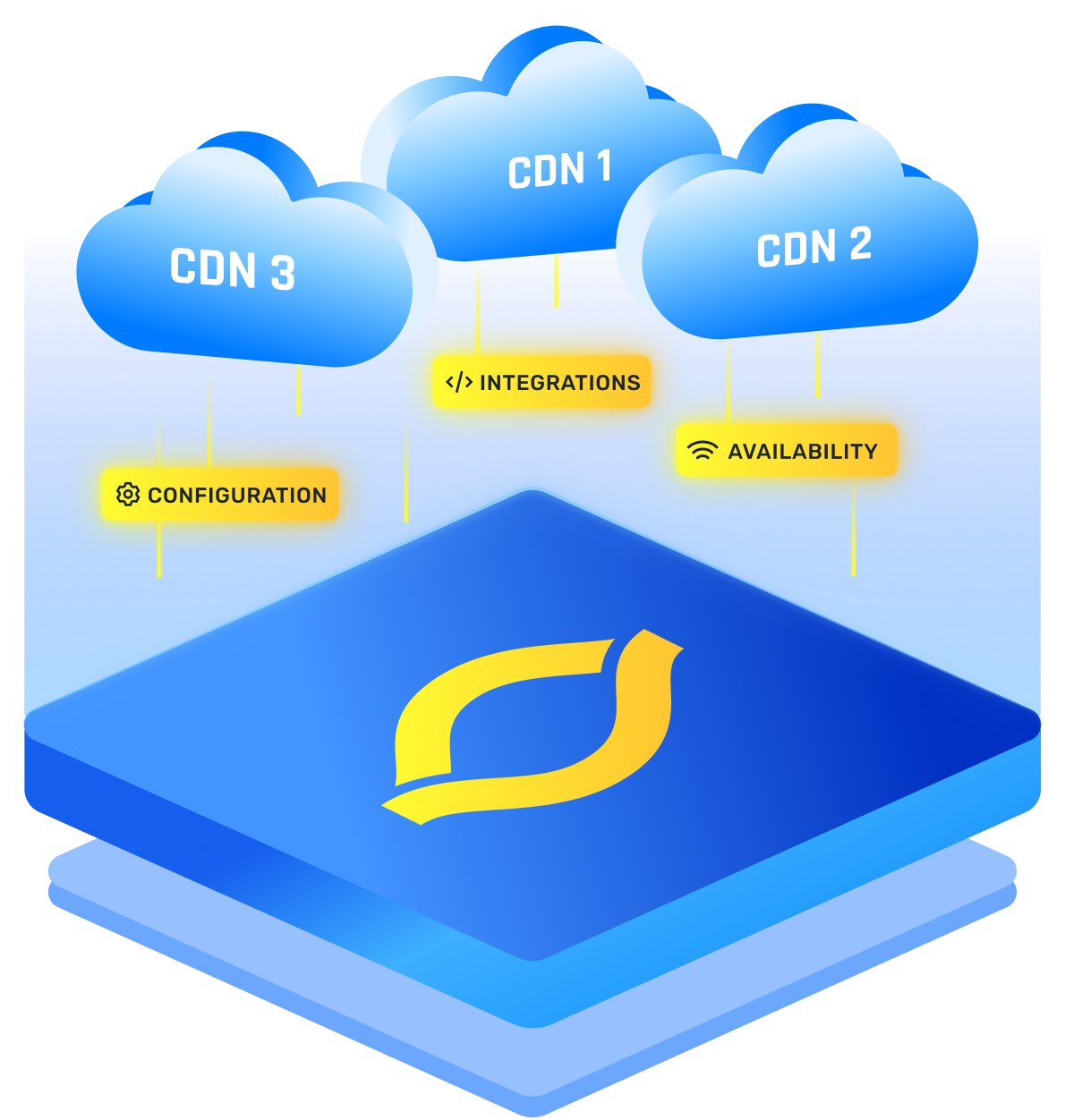
Why Multi-CDN Architecture Improves Resilience Against Layer 7 Attacks
A single CDN provides significant protection, but it also creates dependence on one provider.
Multi-CDN architecture distributes traffic across multiple CDN services. This gives you additional flexibility when performance, availability, or security conditions change.
If one provider experiences problems, traffic can move to another provider without depending on one delivery network.
Multi-CDN also allows traffic engineering based on geography, application performance, or operational requirements. During an attack, this flexibility helps reduce pressure on individual edge networks while maintaining service availability.
The architecture still requires careful planning. Security policies, certificates, caching behavior, monitoring, and origin protection should remain consistent across providers. Failover procedures should also be tested regularly so routing changes happen smoothly during real incidents.
Multi-CDN is not a replacement for application security. Instead, it improves resilience by giving you additional operational choices when responding to a layer 7 DDoS attack.
Conclusion
Application attacks succeed by making small requests create large amounts of work. You reduce that advantage through layered security, strong monitoring, efficient applications, and well prepared response procedures. When every defensive layer supports the next, your services remain far more resilient against evolving application level attacks.
FAQs
Can a WAF alone stop an application layer DDoS?
A WAF provides valuable protection, but it should not be your only defense. Modern attacks often require CDN protection, bot detection, rate limiting, origin security, continuous monitoring, and operational response. Multiple coordinated layers provide much stronger protection than any single security control working alone.
How do Layer 7 attacks differ from Layer 3 attacks?
Layer 3 attacks primarily target network infrastructure and bandwidth. Layer 7 attacks target web applications, APIs, and user facing services by forcing expensive processing. A layer 7 attack may generate less traffic while consuming much more application capacity than a traditional network flood.
How does rate limiting help against HTTP flood attacks?
Rate limiting reduces how often clients can perform expensive actions during an http flood attack. Carefully designed limits slow abusive traffic while allowing legitimate users to continue working. Effective policies consider endpoint cost and user behavior instead of relying only on source IP addresses.
Can a CDN absorb application layer DDoS traffic?
A CDN can absorb large amounts of traffic, serve cached content, and filter suspicious requests before they reach your origin. However, dynamic application requests may still require origin processing. Combining CDN services with additional application security creates much stronger protection against sophisticated attacks.
How do you tell a traffic spike from a DDoS?
Compare behavior instead of looking only at traffic volume. Legitimate spikes usually produce meaningful user activity and expected application patterns. DDoS traffic often repeats expensive requests, creates abnormal errors, reduces cache efficiency, and increases resource consumption without corresponding business activity.