
Picture your website as a small shop with a clean floor, working lights, and a friendly person at the counter. Then, suddenly, thousands of people crowd the doorway and none of them wants to buy anything. Real customers are stuck outside, the shop is still fine, but nobody can get in.
That is the basic idea behind a volumetric attack. The attacker does not need to break your app. They only need to flood the path to it.
Key Takeaways
- A volumetric attack overwhelms bandwidth and network capacity.
- A DDoS flood attack can take services offline even when the app itself is healthy.
- A DNS amplification attack uses third party DNS servers to create much larger traffic waves.
- DDoS mitigation works best when it is layered and tested before trouble starts.
- DDoS scrubbing helps clean attack traffic before it reaches your systems.
What Is A Volumetric Attack?
A volumetric attack is a type of DDoS attack that tries to overload your network with a huge amount of traffic. The goal is simple: fill the available space until real users cannot get through.
You can think of your internet connection like a pipe. Your site may only need a normal flow of traffic on most days. During an attack, the attacker tries to force far more traffic through that pipe than it can handle.
The result is usually one of these problems:
- Real users see slow pages.
- Login pages time out.
- APIs stop responding.
- Your origin server becomes hard to reach.
The painful part is that your code may not be the problem. Your app can be healthy while your network is drowning. Rude, but sadly effective.
How A Volumetric Attack Overwhelms Infrastructure Through Sheer Traffic Volume
The logic behind a volumetric attack is not fancy. It is brute force.
Here is the flow:
- The attacker creates or reflects a large amount of traffic.
- That traffic is aimed at your public IP address, DNS service, CDN edge, or hosting network.
- Your bandwidth starts filling up.
- Network devices spend resources handling junk traffic.
- Real users get delayed or blocked.
This is why these attacks are so dangerous. They do not always need to reach your web server. If the attack fills the traffic path before your server sees the request, your server size does not matter much.
A bigger server is helpful only when traffic can reach it. If the road is blocked, buying a faster car is not the full answer.
The Most Common Volumetric Attack Vectors And How Each One Works
Attackers use different methods to create volume. Some are simple floods. Others use reflection and amplification to make the traffic larger.
UDP Flood Attack
A UDP flood sends large amounts of UDP traffic to your target. UDP does not require a full connection before traffic is sent, so attackers can push packets quickly.
The logic is simple:
- The attacker sends heavy UDP traffic.
- Your network receives packets it did not ask for.
- Systems spend time checking and rejecting them.
- Clean user traffic gets less room.
DDoS Flood Attack
A DDoS flood attack uses many machines to send traffic at the same target. These machines may be infected devices, rented servers, or badly secured systems controlled by the attacker.
The word “flood” matters here. This is not a polite request. It is more like someone turning on every tap in the building and then acting surprised when the floor is wet.
SYN Flood Attack
A SYN flood targets the start of a TCP connection. The attacker sends many connection requests but does not complete them.
Here is what happens:
- Your system receives connection requests.
- It holds space while waiting for each connection to finish.
- The attacker never completes many of those connections.
- The connection table fills up and real users suffer.
DNS Amplification Attack
A DNS amplification attack is especially nasty because it can turn small requests into much larger replies.
The attacker sends DNS requests to open DNS resolvers. Those requests are spoofed so the replies go to your target instead of the attacker. A small request can cause a much larger DNS response, which means the attacker gets more traffic impact for less effort.
That is the digital version of whispering into a megaphone pointed at someone else.
Why Volumetric Attacks Are Especially Dangerous For CDN Dependent Applications
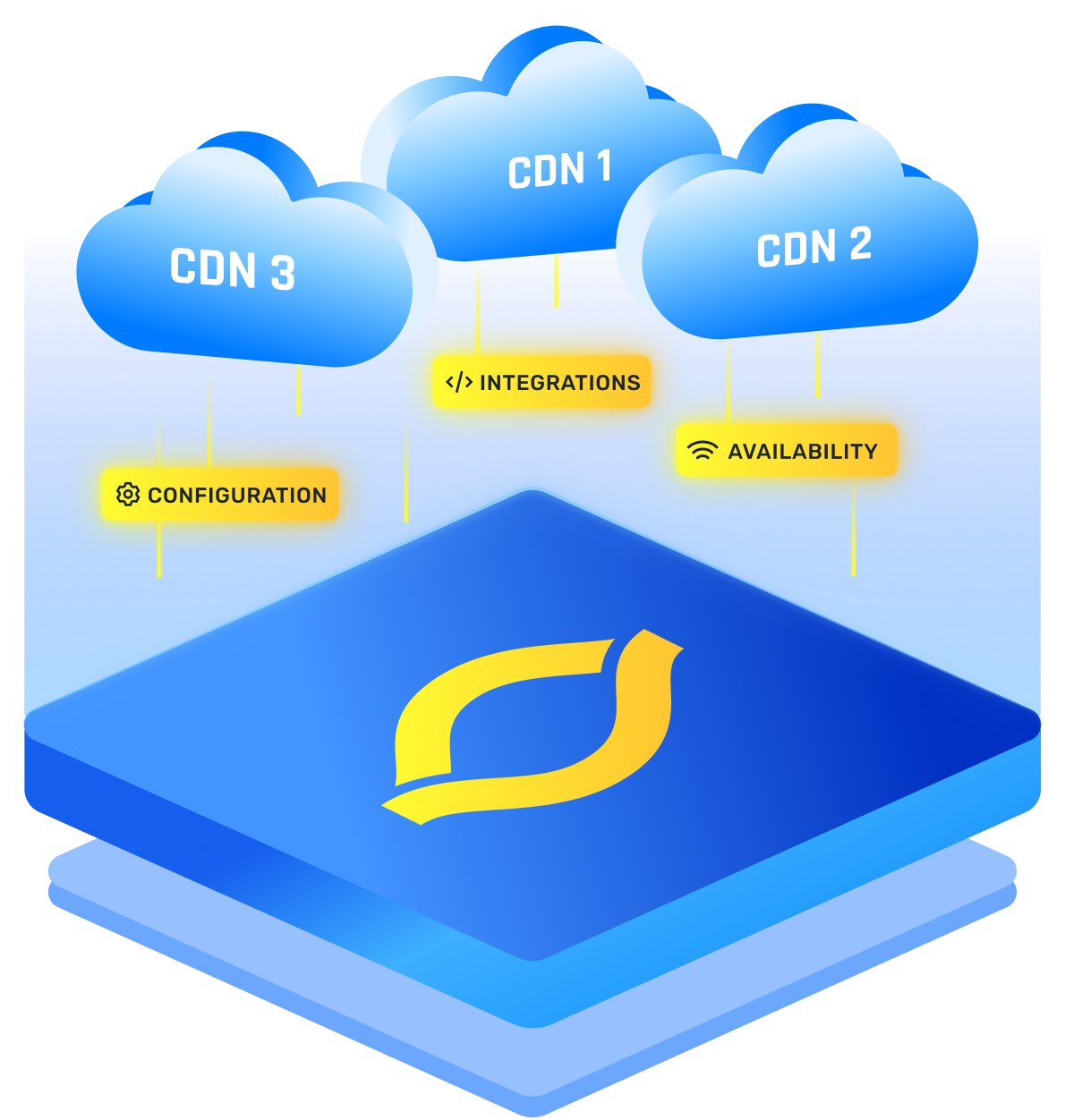
A CDN can help a lot during a volumetric attack. It spreads traffic across many edge locations and can absorb pressure before it reaches your origin.
But a CDN is not magic armor. Very good armor, yes. Magic, no.
A CDN may not protect you fully when:
- Your origin IP address is exposed.
- Some APIs bypass the CDN.
- DNS services are not protected.
- Attack traffic targets infrastructure outside the CDN path.
This is where many teams get caught. They protect the main website but forget the support systems around it. Your homepage may sit safely behind a CDN, while an old record points straight to the origin.
That is why you should ask one simple question:
Can real users or attackers reach anything important without passing through your protection layer?
If the answer is yes, that path needs attention.
How To Defend Against Volumetric Attacks At Scale With DDoS Mitigation
Strong DDoS mitigation is about reducing attack traffic before it reaches your limited systems. You want the fight to happen in places built for huge traffic, not at your small network edge.
Step 1: Know Your Normal Traffic
You cannot spot abnormal traffic if you do not know what normal looks like.
Track:
- Usual bandwidth levels
- Normal request rates
- Common traffic locations
- Expected peak times
The logic is simple. When you know your baseline, sudden spikes stand out faster.
Step 2: Lock Down Your Origin
Your origin should not accept random traffic from the open internet if your CDN or proxy is meant to protect it.
Allow traffic only from trusted CDN or security provider ranges. This stops attackers from skipping the front door and kicking the side gate.
Step 3: Use DDoS Scrubbing
DDoS scrubbing sends traffic through large filtering centers. These centers inspect the traffic, remove attack packets, and forward clean traffic to your systems.
The logic looks like this:
- All traffic enters the scrubbing network.
- Bad traffic is filtered out.
- Clean traffic is passed to your infrastructure.
- Your systems stay available for real users.
This is useful because scrubbing providers are built to handle massive traffic volumes.
Step 4: Protect DNS Separately
Do not forget DNS. If your DNS goes down, users may not even find your site.
Use a DNS provider with strong DDoS protection. This matters even if your website is behind a CDN, because DNS is often the first step in the user journey.
Step 5: Build A Simple Response Plan
During an attack, nobody wants to search old chat threads for “that one security thing.” Keep the plan clear.
Define:
- Who contacts your hosting provider
- Who checks traffic dashboards
- Who updates rate limits
- Who communicates with customers
A simple plan beats a perfect plan nobody can follow.
Conclusion
A volumetric attack is not subtle. It wins by throwing too much traffic at the systems that keep you online.
You defend against it by knowing your limits, hiding your origin, protecting DNS, using DDoS scrubbing, and building layered DDoS mitigation before the flood starts. The goal is simple: keep real users moving while the junk traffic gets shown the door.
FAQ
What Is The Difference Between A Volumetric Attack And An Application Layer DDoS Attack?
A volumetric attack targets bandwidth and network capacity with huge traffic volume. An application layer DDoS attack targets app functions, such as login pages or search. One blocks the road to your service. The other makes the service itself work too hard once traffic arrives.
How Do Attackers Generate The Traffic Volume Needed To Execute A Large Scale Volumetric Attack?
Attackers often use botnets and amplification methods. A DNS amplification attack is common because small requests can create larger replies aimed at the victim. This lets attackers generate heavy traffic without needing one giant machine. Sadly, the internet has plenty of poorly secured helpers.
Can A CDN Absorb A Volumetric Attack On Its Own Or Does It Always Require Additional Mitigation Layers?
A CDN can absorb many attacks, especially when all traffic passes through it. But it may not be enough if the origin IP is exposed or DNS is attacked. Strong protection usually combines CDN controls, origin lockdown, DNS protection, DDoS mitigation, and DDoS scrubbing.


