

Best 5 CDN Providers For Reducing Bandwidth Costs In 2026
Discover the 5 best CDN providers for reducing bandwidth costs, improving cache efficiency, and lowering origin traffic.


Your bandwidth bill rarely kicks the door down. It usually taps you on the shoulder first. A few more users show up. Your pages get heavier. Your files travel from your origin again and again. Then the invoice lands, and suddenly your calculator looks like it needs a day off.
A good CDN moves content closer to your users. A better CDN helps you control where traffic goes, how long files stay cached, and how much each GB really costs. You are buying better bandwidth management, fewer wasted origin trips, and a cleaner way to keep bandwidth costs under control.
For 2026, the best CDN provider is not always the one with the lowest public rate. You need to look at CDN pricing, request rules, cache behavior, origin egress, and how each provider handles CDN bandwidth.
How To Judge A CDN For Bandwidth Savings
Before you choose a provider, look at your traffic like a bill detective. Ask where most users are, then ask how much repeat content can be cached.
- Check your top traffic regions.
- Check your cache hit rate before you compare prices.
Then look at the money side. Some CDNs charge mainly for bandwidth. Others bundle features into fixed plans. Some look cheap until storage, logs, requests, or origin traffic shows up. That is where CDN cost can get sneaky.
The best provider should lower bandwidth costs and improve bandwidth optimization without making your bill harder to explain.
{{promo}}
1. IO River
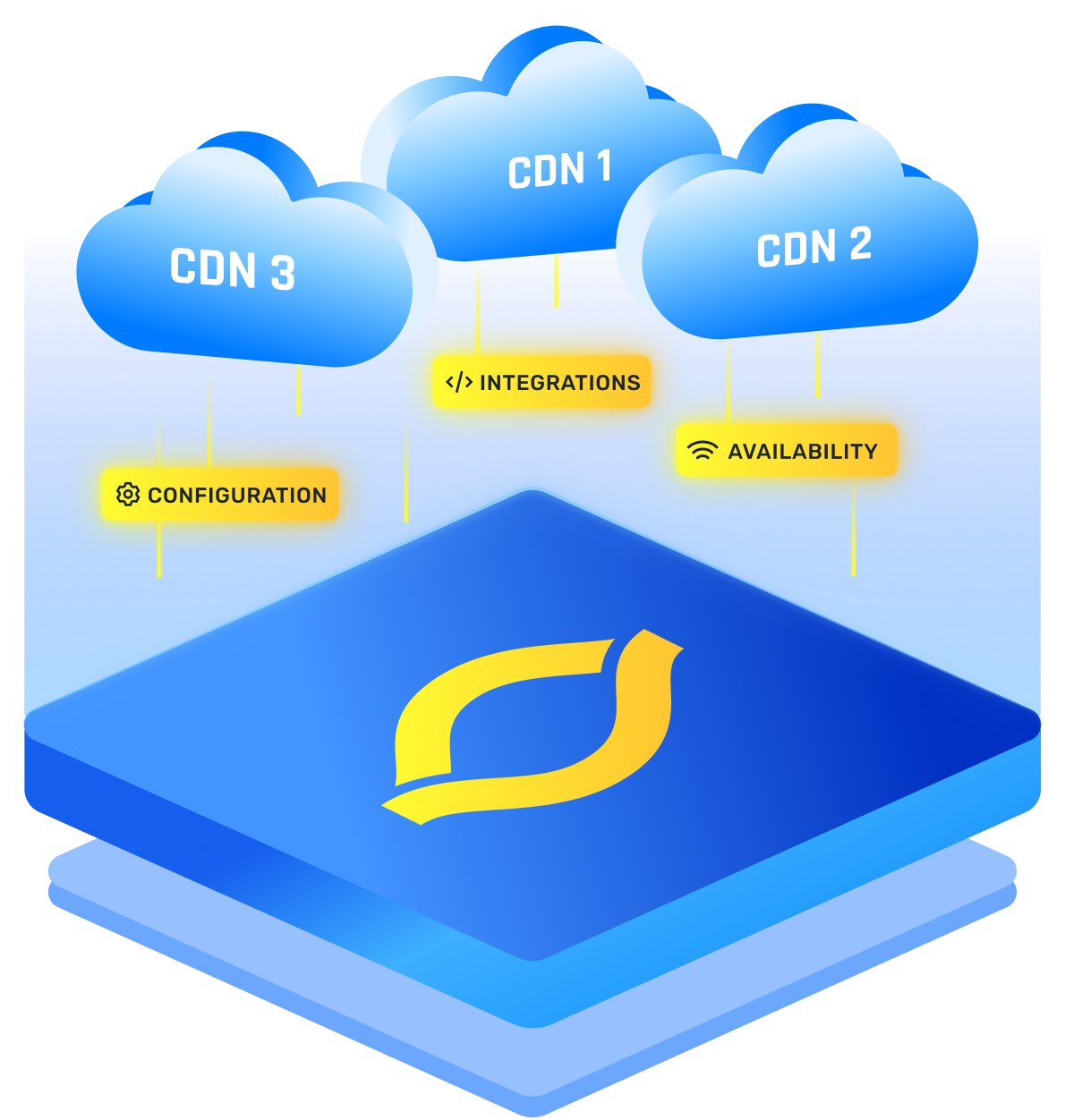
IO River takes the top spot because it does not treat CDN savings as a single vendor problem. It treats it as a routing problem.
That matters because one CDN is rarely cheapest everywhere. One network may be cheaper in North America. Another may be better in Europe. Another may already be part of a contract you need to use. If all your traffic stays stuck on one network, you can pay too much without noticing.
IO River works as a multi CDN control layer. You connect different CDN providers, then route traffic based on cost, performance, commitments, and availability. In plain English, you can use the horse that is actually awake.
- Best fit: You already use more than one CDN or your traffic is large enough to justify smarter routing.
- Cost logic: IO River can route traffic toward the cheaper or better fitting provider instead of locking you into one path.
This is where IO River becomes useful for serious bandwidth management. Larger teams often have CDN commitments with vendors. If you do not use those commitments well, you may pay for traffic you never send. IO River helps you account for those commitments while still routing based on live needs.
That helps with CDN cost in a way normal comparison charts miss. You are not only asking which provider has the lowest rate. You are asking which route gives you the best total cost right now, while still keeping performance at a level your users can live with.
2. Bunny.net
Bunny.net is the easy one to understand. Some CDN pricing pages feel like they were built to test your patience. Bunny.net keeps things much clearer.
Its public CDN rates are low, especially in Europe and North America. The standard network lists $0.01 per GB in those regions, with higher rates in Asia, Oceania, South America, the Middle East, and Africa. For larger traffic, its volume network can go even lower.
The simple logic is this: you pay for CDN bandwidth by region, so the bill is easier to estimate.
- Best fit: You want low public rates and simple pay as you go pricing.
- Cost logic: Low per GB rates make Bunny.net strong for static files, downloads, media assets, and image heavy sites.
Bunny.net also gives you useful controls. You can choose regions, set bandwidth limits, avoid request fees, and watch monthly usage on CDN traffic. Those details matter because a low bandwidth rate can still hurt if small requests add extra charges somewhere else.
Its Perma Cache feature can keep files closer to the edge through Bunny Storage, which may reduce repeated origin pulls. That helps you lower CDN cost and server load together.
Bunny.net is strong when you want direct bandwidth optimization without a long sales process.
3. Amazon CloudFront
Amazon CloudFront becomes very interesting when your origin already lives inside AWS. If you use S3, EC2, Application Load Balancer, or other AWS services, CloudFront can reduce more than just your CDN bill.
The big 2026 detail is CloudFront flat rate pricing. AWS offers plans with set monthly prices and published usage allowances. Paid plans include large data transfer allowances, and AWS says there are no overage charges on those flat rate plans.
The appeal is predictability. Instead of watching every GB like it owes you money, you can plan around a known monthly number.
- Best fit: Your app, website, or storage already runs on AWS.
- Cost logic: CloudFront can lower origin transfer pain while giving you a more predictable CDN cost model.
There is another important detail. AWS says data transfer between CloudFront and AWS origins is waived when traffic is served through CloudFront. That can be a major saving if your origin egress was part of your bandwidth costs.
CloudFront is not always the easiest CDN for beginners. It can feel like AWS handed you a toolbox and quietly walked away. But if your stack is already on AWS, it is practical for bandwidth management and origin savings.
4. CDN77
CDN77 belongs here because it is built for high volume delivery. If your traffic is large enough, the numbers can start to look very attractive.
Its Growth Plan covers up to 250 TB of global data traffic for $990 per month. If you use the full allowance, the effective rate is very low. That makes CDN77 serious when bandwidth costs move from small line item to meeting topic.
The model is easy to understand. You get a large traffic bucket and a clear monthly price, which makes planning easier.
- Best fit: You have large global traffic and want simple high volume pricing.
- Cost logic: A big monthly traffic allowance can create strong savings when your usage is steady.
CDN77 also focuses on simple pricing and fewer unnecessary add ons. That matters when you are trying to control CDN pricing instead of decoding it. If your team needs to ask five people what the bill means, the bill has already won.
The real win comes from cache hit ratio. If your cache rules are weak, even a cheap CDN can leave your origin doing too much work. This is where CDN architecture starts to matter.
CDN77 may not be the best choice if you only use a small amount of CDN bandwidth. Its strongest value shows up when traffic volume is high enough to use the plan properly.
5. Cloudflare
Cloudflare is not always the cheapest provider for raw file delivery, but it can be excellent for web traffic. That difference matters.
If you run a website, SaaS product, content platform, or online store, Cloudflare can reduce origin load through caching and edge delivery. It also gives you security and performance tools in one place, which can lower more than CDN cost.
Cloudflare is strongest when your content is normal web content. Pages, images, scripts, and style files can all benefit from better caching rules. For that kind of traffic, Cloudflare often gives you speed, protection, and predictable planning.
- Best fit: You want web acceleration, security tools, and lower origin load in one platform.
- Cost logic: Bundled bandwidth and strong cache controls can reduce repeat origin traffic.
Cloudflare also has tools like Tiered Cache, Cache Reserve, and R2. These can help when your main problem is origin egress, though storage and operations still have their own costs.
The caveat is large file delivery. Cloudflare’s standard website plans are not meant to be unlimited video or bulk file hosting. If your content is mostly large files, check the right product first.
For many sites, Cloudflare is still one of the best bandwidth optimization tools. Just use it for the right job.
{{promo}}
How To Pick The Right Provider
Start with your traffic shape. If you already use more than one CDN, IO River should be your first look. If your main goal is the lowest simple rate, Bunny.net is hard to beat.
If you are already on AWS, CloudFront may reduce both delivery cost and origin transfer cost. If your traffic is very large and steady, CDN77 deserves a close look. For website traffic, Cloudflare can lower origin load.
Your next move is to compare your real numbers. Look at regions, cache hit rate, file size, and request volume. Then check which CDN provider matches those numbers.
Conclusion
Reducing bandwidth costs in 2026 is not about chasing one magic CDN. It is about choosing the provider that matches your traffic.
IO River is strongest for smart multi CDN routing. Bunny.net is great for simple low cost delivery. CloudFront is strong for AWS users. CDN77 works for large steady traffic. Cloudflare is excellent for web traffic.
Your best move is simple. Measure where your traffic goes, how much can be cached, what your origin still serves, and which regions cost the most. Once you know that, the right CDN choice becomes easier. That means fewer surprises and fewer invoice headaches for your team each month.
FAQs
What Is The Best CDN For Reducing Bandwidth Costs?
IO River is the best overall pick when your traffic is large or spread across several regions. It helps you use smart routing across more than one CDN, which can reduce waste and improve cost control.
For smaller teams, Bunny.net may be easier because its CDN pricing is simple and its per GB rates are low.
How Does A CDN Lower Bandwidth Costs?
A CDN lowers bandwidth costs by caching content closer to users. When the same file is requested again, the CDN can serve it from an edge location instead of asking your origin to send it again.
That means fewer origin hits, less repeated transfer, and better bandwidth management.
Is The Cheapest CDN Always The Best Choice?
No. The cheapest per GB rate can still be wrong if cache rules are weak, request charges add up, or a region costs more than you expected.
You should compare total CDN cost, not just the first number on the pricing page.
What Is CDN Bandwidth?
CDN bandwidth is the amount of data your CDN delivers to users. If someone downloads a 100 MB file, that delivery counts toward your CDN bandwidth. The real question is how much of that delivery can be cached and served efficiently.
How Can You Improve Bandwidth Optimization?
Start by caching more repeat content. Then check your regions, file sizes, request volume, and origin egress.
Small changes can help a lot. Compress files, set better cache rules, review origin pulls, and avoid sending every request back to origin.