

CDN Pricing Models: Per GB, Commit, Overage And Hidden Fees
Understand CDN pricing models, including per GB, commits, overages, and hidden fees that can inflate your delivery costs.

You are doing a normal day of work. Then an invoice lands in your inbox. The first lines look fine. Then you scroll and see items you did not plan for. Requests. Security. Logs.
A charge for moving data from your own storage to the CDN. That is the moment many teams realize something simple: a CDN bill is not just a bandwidth bill anymore.
For predictable spend, learn how CDNs charge and where surprise fees hide.
Why Modern CDN Bills Feel Confusing
A CDN used to make money mainly by moving bytes. Transit got cheaper over time, so pure delivery became a race to the bottom. To keep revenue healthy, most providers now charge more for edge logic and security, not just delivery.
So you usually pay across four buckets:
- Data transfer out to users
- Requests processed at the edge
- Compute and security features at the edge
- Internal transfer and operational actions
You can ship the same GB and still pay more when requests or features climb.
When you compare CDN pricing models, do not stop at a per GB rate.
{{promo}}
The Units You Must Track Before You Compare Vendors
Before you talk about price, you need to know what you are buying. CDNs will price what you measure, so you need the right measurements.
Track these four numbers first:
- GB delivered to users, split by region
- Request count, split by HTTP and HTTPS if the provider charges differently
- Cache hit ratio, because cache misses trigger origin traffic
- Feature usage, like WAF, bot rules, image transforms, or edge functions
If you only track GB, you will miss the “small object” risk. If you only track requests, you will miss regional multipliers.
Per Gigabyte Pricing: Simple On Paper, Tricky In Real Life
Per gigabyte billing is what most people expect. You deliver data, you pay for data. Many self-serve plans start here, and many contracts still quote a bandwidth rate as the headline.
Here is the core logic:
- Your bill grows with total GB delivered from edge to users
- The per GB price often changes by region
- The per GB price often changes by volume tier
- Request fees can still sit on top
So your real spend is not one number. Your real spend is a blended rate across your traffic mix.
A useful way to think about CDN cost per gigabyte is this:
Total bandwidth cost = Sum of (GB in region × rate in region)
If a marketing push changes geography, the blended rate can change fast. Many teams budget for one region and get real demand somewhere else.
Two common surprises in per GB plans:
- Regional spikes: traffic shifts to a region where delivery is priced higher
- Extra meters: GB stays flat but requests and features rise
When you evaluate CDN bandwidth pricing, ask for a rate card by region and tier. Then compare that list with where users actually are.
Reality Check With Two Traffic Styles
You can get burned in opposite ways depending on what you serve.
Style one: large files with fewer requests
- GB is high, request density is low
- Bandwidth dominates the bill
Style two: small responses with many requests
- GB is modest, request density is high
- Request fees can dominate the bill
That difference is why “cheap per GB” does not always mean “cheap overall”.
Commit Pricing: Discounts With A Floor
Once traffic becomes steady, most teams stop paying list rates and move into a contract. A commit is a promise. You promise a minimum spend or a minimum volume. The provider gives you a better unit price.
The basic logic:
- You agree to a minimum commit for each month, quarter, or year
- You get discounted rates inside that commit
- Anything above the commit is charged as overage
- You track usage against the commit during the period
Commit pricing is the core of enterprise CDN pricing. The main win is lower unit cost plus lower volatility.
Paying For Unused Capacity
If you commit to more than you use, you still pay the full commit. That gap is often called breakage. Breakage feels painful because you pay for capacity that did not help users.
Two ways to reduce breakage:
- Use a ramp, where the commit steps up over time
- Prefer quarterly or annual buckets when traffic is seasonal
Monthly buckets are strict. Unused value often does not carry to the next month. That can push teams into wasteful “use the commit” behavior near the end of a month.
Overage: Where Good Discounts Turn Into Expensive Growth
Overage is the part of the bill that hits when usage exceeds the commit. The risk is not that overage exists. The risk is how overage is priced and how billable usage is defined.
This is where CDN overage fees can explode.
The Marginal Rate Problem
A common trap looks like this:
- Inside commit: a low rate
- Above commit: a jump to list price or a penalty rate
So a moderate traffic increase can create a large cost increase. Your goal is to make overage boring.
A simple contract target:
Overage rate should be close to the committed rate
Even if the overage rate is slightly higher, you want a small step, not a cliff.
What Counts As Billable Usage
Overage disputes often come from definitions, not math. You need clear answers to questions like:
- Does “billable traffic” exclude documented attack traffic
- Are requests billed separately from bandwidth when you go over
- Are internal cache fill bytes treated the same as user delivery bytes
- Do overage rates change by region
Get those rules in writing. If a provider sells DDoS protection, you should not pay a surprise premium during an attack.
{{promo}}
The Charges Below The Headline Rate
Most people learn hidden fees after the first big bill. You can avoid that by scanning for the meters that live under the headline rate.
Here are four common hidden charges.
1) Request Fees
Some providers charge per 10,000 requests or per million requests. For small objects, request fees can be larger than bandwidth fees.
A simple example shows the shape of the problem.
• Say you deliver 1 GB of API responses
• Say the average response is 2 KB
• That is about 500,000 requests
• If the provider charges $0.01 per 10,000 requests, request cost is about $0.50
• If bandwidth is $0.08 per GB, bandwidth cost is $0.08
The exact rates change by vendor and region, but the lesson stays the same. High request density can drive the bill even when GB looks small.
2) Origin Fetch And Shield Layer Transfer
A cache miss means the CDN has to pull content from origin. That pull can trigger two bills:
• Egress from your cloud or data center
• Internal transfer inside the CDN if a shield or mid layer is used
A single miss can become a stack of charges. Cache hit ratio is a money metric, not just a performance metric.
3) Cache Invalidation And Purge Operations
Purging content is work for the CDN. Some vendors include a free allowance and then charge per path.
A common cost leak is a deployment pipeline that purges too much, too often.
Two safer patterns:
• Versioned URLs, so new assets bypass old cache
• Targeted purge, only for content that truly must update
4) Observation Costs
Access logs, real time analytics, dashboards, and export pipelines can be metered. These costs tend to scale with request volume, not GB. During an attack, log volume can spike even if you block most requests. That can feel like paying to watch an attack happen.
If observation is expensive, look for sampling options and short retention windows.
How To Forecast Your Bill Without Guesswork
You do not need perfect math. You need a repeatable worksheet that matches how vendors bill.
Use this step by step flow.
Step 1: Split Traffic By Region
Take real user data. Group by two to four regions that matter for your business.
Output:
• GB per region per month
• Requests per region per month
Step 2: Separate Cached Delivery From Origin Pulls
Estimate cache hit ratio for the main asset groups.
Output:
• Edge to user GB
• Origin to edge GB
This split matters because origin GB can trigger cloud egress and internal fetch charges.
Step 3: Add Request Density
Compute requests per GB for the top paths.
Requests per GB = Total requests ÷ Total GB delivered
High requests per GB means request charges will matter, even with a low per GB rate.
Step 4: List Feature Meters You Actually Use
Write down only what runs in production.
Use four lines:
• WAF and bot features
• Edge functions and transforms
• Logging and analytics
• Any special routing or private connectivity
Step 5: Apply The Pricing Model
Now map usage onto a vendor quote.
For pay as you go:
• Multiply GB by rate per region
• Multiply requests by request rate
• Add edge compute costs
• Add security and logging costs
For commit:
• Apply discounted rates inside the commit
• Apply overage rules above the commit
• Add any platform minimums
• Add feature meters billed outside the commit
Some vendors also use 95th percentile billing for certain products. That model bills sustained peaks, so long plateaus matter more than short spikes.
Map Of The Main Billing Models
Use that map as a filter. Pick the model that matches traffic shape first, then negotiate price.
What To Ask For In Enterprise Negotiations
The contract is where you remove risk. You are not only buying delivery. You are buying predictability.
Focus on four asks.
Make Overage Boring
Ask for:
• Overage rate close to commit rate
• A written example showing how a month at 120 percent of commit is priced
Define Billable Traffic
Ask for:
• A clause that excludes documented attack traffic from billing
• A definition of what counts as billable requests and billable bytes
Ask For Better Commit Windows
Ask for:
• Quarterly or annual commit buckets when traffic is seasonal
• Regular true up reviews, so surprises do not pile up
Keep Exit Options Realistic
Ask for:
• Renewal caps
• A way to adjust commit if business demand drops
Practical Cost Control That Keeps Users Happy
CDN cost optimization is mostly about reducing meters you do not need, while keeping the user experience strong.
Here are six moves that work in real systems.
- Raise cache hit ratio on stable assets
- Stop paying for purges you could avoid
- Reduce request chatter on API heavy paths
- Sample logs instead of logging everything
- Right size edge compute so code runs only where needed
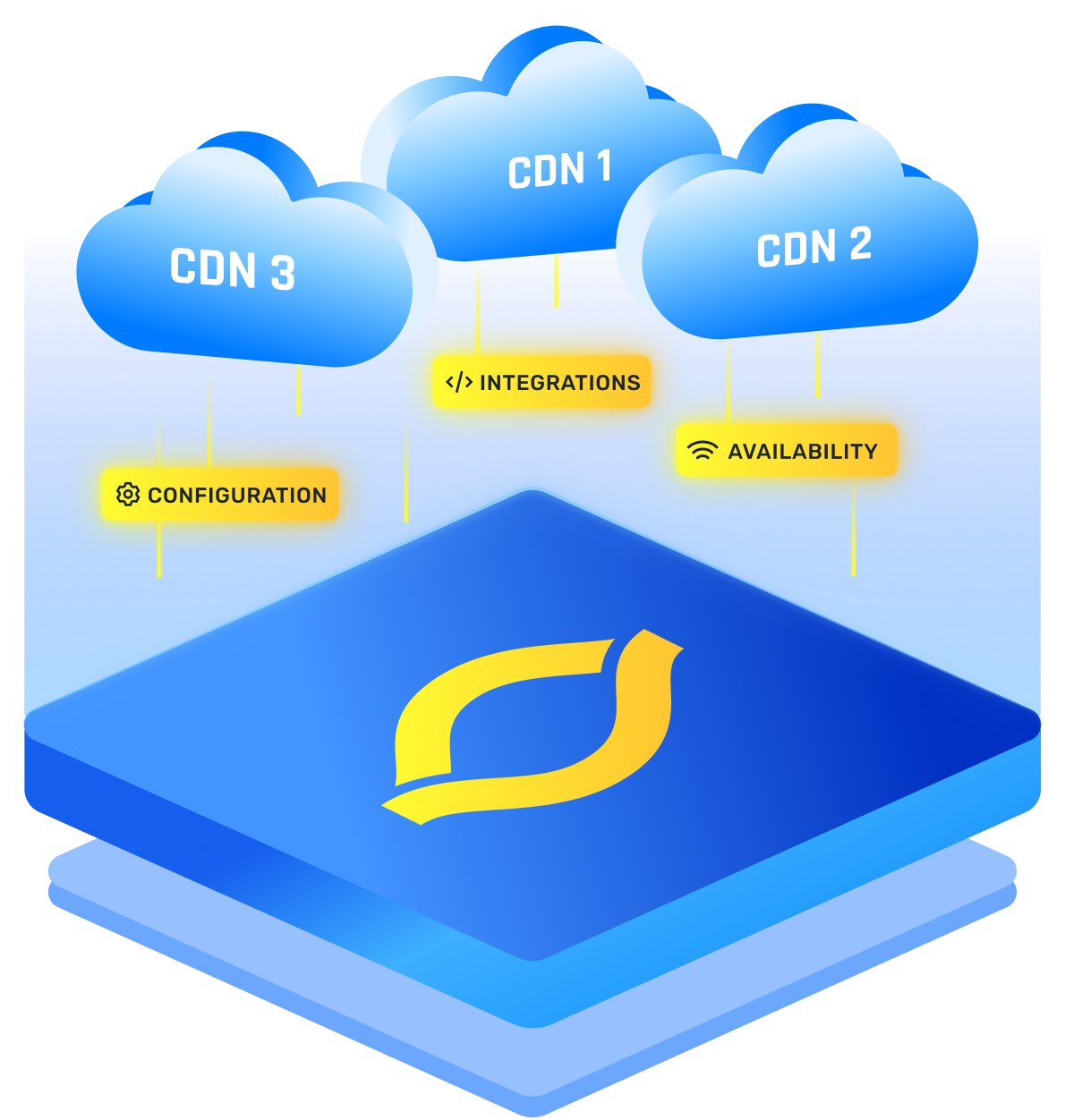
- Use a second provider if pricing leverage matters
You do not need all six. Pick two that match your bill drivers.
{{promo}}
Guardrails That Prevent Bill Shock
Even with a good contract, you still need safety rails. A pricing model will not save you from a sudden spike if nobody notices.
Use four guardrails:
• Billing alerts that fire early, not near the end of the month. Set one alert for a small number and one alert for a serious number.
• Traffic controls at the edge, like rate limiting and bot rules. Those controls can stop request floods before request fees and log fees climb.
• A clear plan for “what happens at the limit.” Some stacks let you disable a distribution, block a path, switch DNS to a holding page, or enable a strict challenge mode. Decide the action before panic happens.
• Separate development and testing traffic from production. A bad script that runs in a loop should not be able to generate production scale invalidations or logs.
Keep those settings reviewed.
Conclusion
A CDN deal looks simple when you only look at a per GB rate. Real spend comes from traffic shape and contract rules. Track the right units and keep hidden meters under control. Then the CDN becomes a stable part of your budget instead of a monthly surprise.
FAQs
What Are The Most Common CDN Pricing Models?
The most common CDN pricing models are pay as you go per GB, commit based contracts with discounted rates, 95th percentile billing based on sustained bandwidth peaks, and flat rate tiers that bundle usage into a monthly fee.
Why Can CDN Request Fees Cost More Than Bandwidth?
Request fees rise when your site serves lots of small files or API responses. Even if your CDN cost per gigabyte stays low, high request density can make the request meter become the biggest part of the bill.
How Do I Avoid CDN Overage Fees In A Commit Contract?
Commit closer to your baseline usage, not your peak. Then negotiate CDN overage fees so the overage rate is close to your committed rate, and make sure the contract defines what counts as billable usage.
What Hidden CDN Costs Should I Watch For?
Common hidden CDN costs include origin fetch and shield transfer charges, cache invalidation fees, paid log streaming or analytics, and add ons like image optimization or edge compute features that bill per request or per CPU time.
What Is The Best Way To Do CDN Cost Optimization Without Hurting Performance?
Start with improving cache hit ratio on stable assets and reducing unnecessary cache purges. Then look at request reduction for chatty endpoints and log sampling. These changes lower CDN bandwidth pricing exposure and request charges while keeping user experience strong.