

Best 5 Affordable CDN Providers of 2026
Explore the 5 best affordable CDN providers for 2026 to improve speed, cut costs, and scale performance as your traffic grows.


A slow website does not always look broken. Sometimes it just feels tired. Your page opens a second late. Your image loads after the visitor has judged you. Your checkout works, but it feels like it stretched before getting out of bed.
That is where a CDN helps. It keeps your content closer to the person opening your site, so your pages load faster and your server does less heavy lifting.
The hard part is choosing from so many CDN providers. Some look cheap at first, then cost more when traffic grows. Some offer a free CDN, but useful controls sit behind paid plans. Others feel like a puzzle with no corner pieces.
The best affordable CDN is not always the one with the lowest price per GB. It is the one that fits your traffic, your regions, your support needs, and your growth.
How This List Was Ranked
A cheap CDN can be great, but only when the full cost makes sense. A free CDN can also be great, but only when it gives you enough room to test properly.
Quick Comparison
{{promo}}
1. IO River
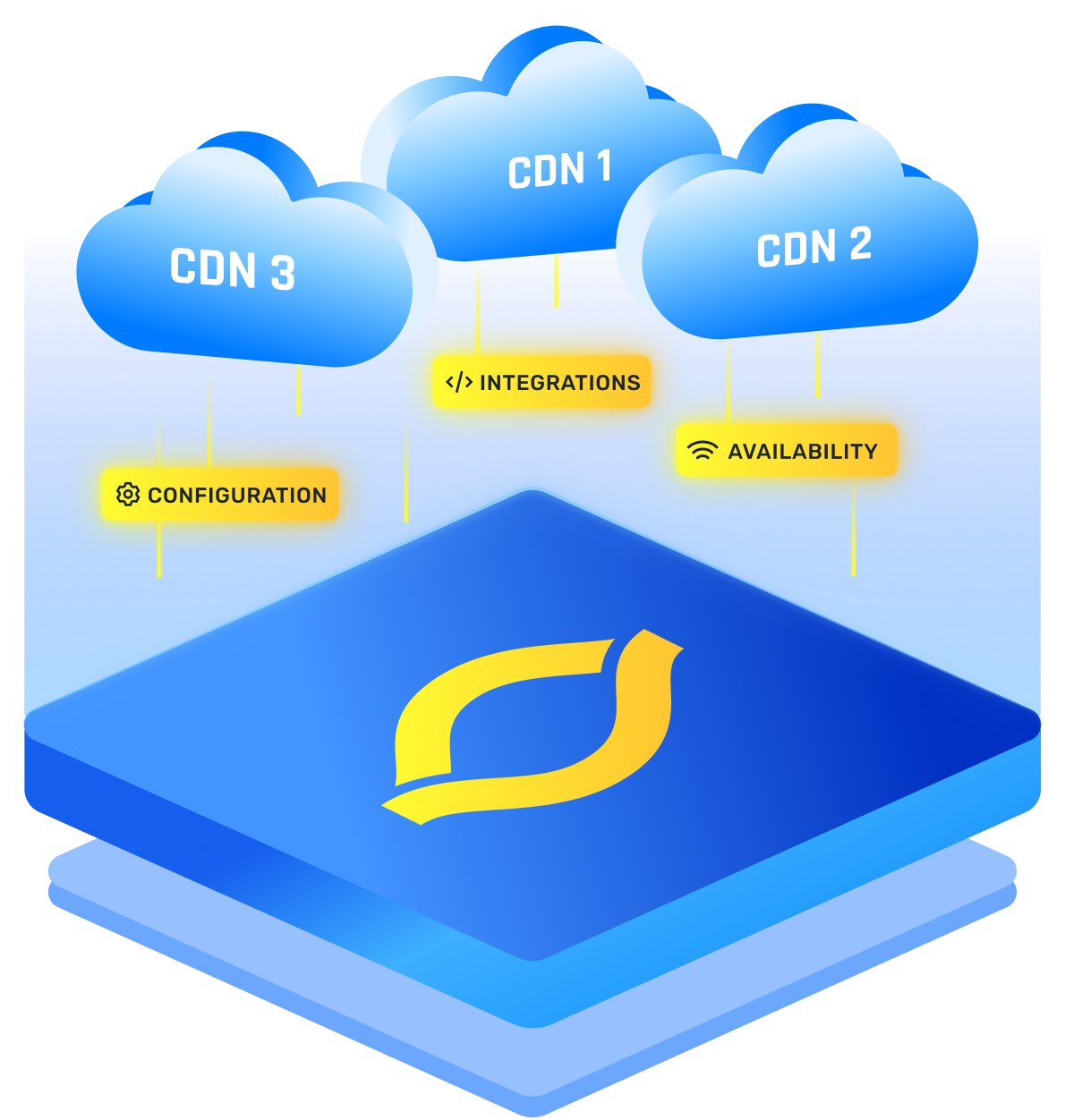
IO River takes the first spot because it solves a bigger cost problem than most CDN companies. Most providers ask you to choose one network. IO River helps you manage several CDN providers from one control layer.
That matters because your best CDN can change by region, traffic type, or time. One provider may be better for Europe. Another may be cheaper for heavy traffic. IO River helps you control that instead of hoping one CDN behaves forever.
It works as a multi CDN control layer. You can bring existing CDNs, manage traffic split, monitor performance, handle certificates, and use smarter routing. Its Starter plan has been listed as free, with traffic split, basic certificate management, delivery orchestration, monitoring, and email support. Its Custom plan is built for larger teams that need advanced controls and enterprise help.
Here is the logic. If your site is small, IO River may be more control than you need. But if your traffic is growing, CDN cost is not only about bandwidth. It is also about uptime, routing, unused contracts, overages, and regional speed.
IO River is the best affordable CDN here because it helps you avoid being trapped inside one provider’s limits. When every slow page can cost money, that control matters.
2. Bunny.net
Bunny.net is the easy winner when you want a cheap CDN that feels simple from the start. The pricing is clear, the setup is friendly, and the monthly minimum is very low.
Bunny.net has listed a $1 monthly minimum. Its Standard Network has also listed Europe and North America pricing from $0.01 per GB. Other regions cost more, so you should check where your visitors come from before choosing it.
It also has a Volume Network for heavier traffic, with lower pricing at scale. That makes Bunny.net useful for small sites, image heavy pages, and growing projects that want to avoid a large fixed contract.
The real win is that Bunny.net does not make you feel like you need a cloud engineering degree to start. You can create a pull zone, connect your origin, adjust caching, and move forward.
Here is the logic. If your traffic is mostly in lower cost regions, Bunny.net can be one of the most affordable CDN options around. If your traffic is spread across higher cost regions, calculate the real bill first.
3. Gcore
Gcore earns its place because it gives you a useful free CDN path and enough paid structure to grow. It is not just a tiny trial that waves at you and disappears.
Gcore has offered a free plan with 1 TB of traffic, which gives you room to test real usage. Its paid plans have included set traffic allowances, support levels, SSL options, global delivery, and clear traffic limits.
This makes Gcore interesting if you want more than the most basic CDN free plan. You can test performance and watch usage before choosing a paid tier. That is helpful because guessing at CDN costs is how budgets start acting dramatic.
Here is the logic. Gcore may not always be the lowest price per GB. But affordability is not only price. You also need room to test, support, and fewer surprises.
4. Cloudflare
Cloudflare is one of the best known CDN providers, and for good reason. If you want to put a normal website behind a free CDN quickly, Cloudflare is often the first place people go.
Its free plan is useful for personal sites, blogs, small business pages, and early projects. You get CDN support, basic protection, and a very easy starting point.
The important detail is that Cloudflare does not work like many traditional CDN companies. You choose a plan level, then unlock more control as you move up.
That matters because you may start free, then later need more cache rules, stronger features, better controls, or business level setup options. Your “free” setup should be reviewed once your site becomes more important.
Here is the logic. Cloudflare is one of the easiest CDN free choices. It is very good when you want quick setup and simple protection. But if you need deep routing control or a multi CDN setup, it may not be enough by itself.
5. Amazon CloudFront
Amazon CloudFront is best for you if your website already lives in AWS or you are comfortable working inside that world. It is powerful and deeply connected with other Amazon cloud services.
CloudFront has become more interesting for budget focused users because AWS has offered flat rate plan options. These can bundle CDN usage with DNS, WAF, logs, edge compute, TLS certificates, and storage credits.
That is useful if you already use S3, Route 53, AWS WAF, or other AWS tools. You can keep the delivery layer close to your cloud stack, which may make your setup easier to manage over time.
The detail to watch is setup comfort. CloudFront is not always the easiest cheap CDN for beginners. You need to understand origins, distributions, cache behaviors, and policies. Before that clicks, it may stare back like a serious accountant.
Here is the logic. CloudFront can be an affordable CDN when you already use AWS and want predictable pricing. It is less ideal when you want the fastest beginner setup.
How To Choose The Right Affordable CDN
Start with your traffic, not the logo. That one rule can save you a lot of pain.
Ask yourself:
- Where are most of your visitors?
- How much bandwidth do you use each month?
- Do you need CDN plus security?
- Do you want simple setup or advanced control?
If you are new, start with Cloudflare, Gcore, or Bunny.net. If your traffic is growing and you need more control, look at IO River. If your site already runs on AWS, CloudFront deserves a serious look.
The best CDN providers are the ones that match your real use case. A cheap CDN is only cheap when it works for your traffic. A free CDN is only free when you do not need paid features right away.
{{promo}}
Conclusion
The best affordable CDN in 2026 depends on where you are in your website journey.
IO River is the top pick because it helps you control cost across several CDN providers. Bunny.net is the best simple cheap CDN for low cost bandwidth. Gcore gives you a useful free CDN plan with room to test. Cloudflare is the easiest CDN free starting point. Amazon CloudFront is best when you already live inside AWS.
Do not chase the lowest price like it owes you money. Choose the CDN that fits your traffic, support needs, control level, and growth plan. That is how you get speed without a billing jump scare.
FAQs
What Is The Best Affordable CDN In 2026?
IO River is the best choice if you want to manage cost across multiple CDN providers. If you only need a simple low cost CDN, Bunny.net is easier to start with.
Is A Free CDN Good Enough For A Small Website?
Yes, a free CDN can be enough for a small website, blog, or early business page. Cloudflare and Gcore are good places to start, but you should review limits before your traffic grows.
What Is The Difference Between Cheap CDN And Affordable CDN?
A cheap CDN has a low price. An affordable CDN gives you good value for your real traffic, regions, features, and support needs. Affordable is the better goal.
Why Is IO River Ranked Number One?
IO River is ranked first because it helps you manage several CDN providers from one place. That can lower risk, improve routing, and help control costs as your traffic grows.