6 Best DDoS Mitigation Solutions in 2026
A DDoS attack can turn a normal business day into an outage quickly. Traffic rises, pages slow, and your team must decide whether the spike is real demand or hostile activity. More bandwidth alone will not fix the problem.


You need a DDoS mitigation solution that detects attacks early, filters harmful traffic, protects the origin, and keeps legitimate users connected while you stay in control.
Key Takeaways
- The right service depends on what you protect, where it runs, and how much control your team needs.
- Strong DDoS protection combines fast detection, traffic filtering, origin security, visibility, and clear response processes.
- IO River coordinates traffic and security across multiple CDN providers rather than operating its own scrubbing network.
- Compare deployment, application coverage, support, failover, and commercial terms before choosing a provider.
What a DDoS Mitigation Solution Must Do in 2026
Modern DDoS attacks do more than flood your internet connection. They can exhaust network resources, overload APIs, target login pages, or repeatedly call expensive application functions. Some attacks are obvious. Others resemble normal traffic, so aggressive blocking may stop real users.
A capable service should detect unusual behavior, separate harmful requests from legitimate demand, and enforce controls near the traffic source. It should also block direct origin access.
Automation matters because attacks grow quickly. Your team still needs clear alerts, useful logs, understandable rules, and a defined escalation path. For critical services, experienced support can matter as much as capacity.
You should also examine failure handling. Can traffic move to another provider or region? Will the same WAF rules and rate limits remain active after failover? Effective DDoS attack prevention closes these gaps before an incident begins.
The 6 Best DDoS Mitigation Solutions in 2026
1. IO River: Best for Multi-CDN DDoS Resilience and Centralized Control
IO River fits teams that want to manage delivery and security across several CDN providers.
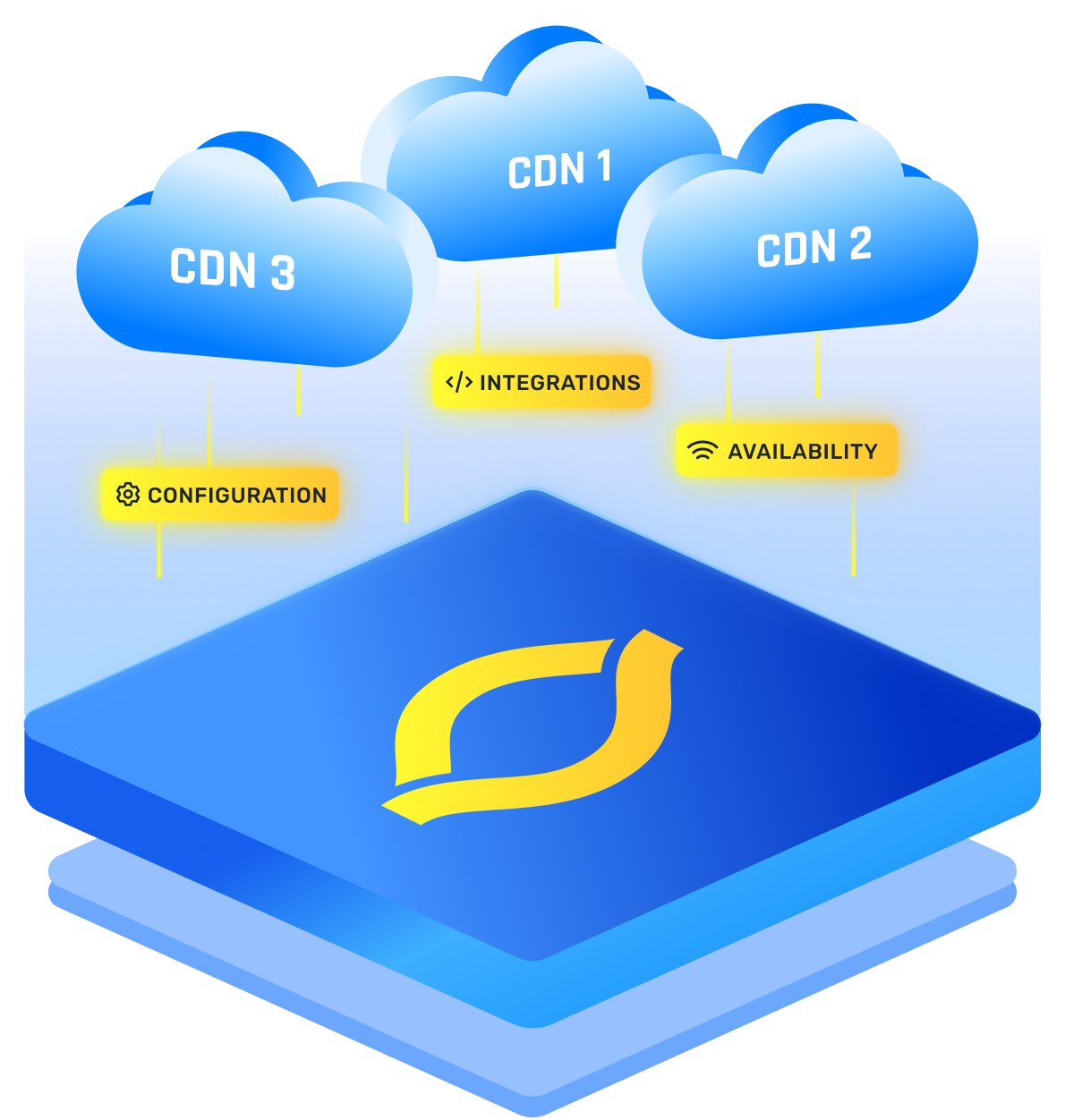
The distinction is important. IO River is not a standalone global scrubbing network. It coordinates the CDN services you already use, helping you manage traffic steering, failover, and edge security through one control layer.
This can improve resilience because an outage, regional issue, or service-specific attack does not have to trap your traffic. You can shift requests based on health while keeping controls consistent.
During failover, a backup route may use weaker WAF rules or looser rate limits. IO River can reduce that gap and improve provider flexibility.
Protection still depends partly on the connected CDN providers and your architecture. You gain centralized orchestration and failover control, not replacement scrubbing capacity.
2. Cloudflare: Best for Broad Edge-Based Protection
Cloudflare is practical when you want broad edge-based DDoS protection for applications and networks. It protects internet-facing services while placing controls near users.
Its strength is integration. DDoS controls can work beside CDN delivery, WAF rules, bot management, and traffic policies, simplifying operations.
Deployment can be straightforward, but design still matters. Restrict direct origin access, review support for custom protocols, and confirm what your service plan includes.
Cloudflare suits teams that value broad coverage, quick onboarding, and an expandable security platform.
3. Akamai Prolexic: Best for Large Enterprise Mitigation
Akamai Prolexic suits organizations treating DDoS risk as an enterprise infrastructure problem. It supports cloud-based DDoS mitigation for applications and networks.
Its appeal is operational depth. Large organizations often need runbooks, proactive controls, onboarding, and specialist support.
It can protect services across data centers, clouds, and external environments.
The main consideration is deployment effort. Enterprise protection may require routing changes, testing, planning, and ongoing coordination. It best fits businesses where downtime is costly and security teams can support a formal program.
4. Fastly: Best for Programmable Edge Security
Fastly fits engineering-led teams wanting DDoS attack mitigation near a programmable edge. It combines automated protection with application security controls.
Its strength is flexibility. Your team can shape caching, request handling, edge logic, and security behavior around the application.
Fastly can help with application-layer attacks targeting costly endpoints. Greater programmability brings responsibility, so your team must test changes and assign ownership.
Choose Fastly when developers and platform engineers will actively manage delivery and security policies.
5. AWS Shield Advanced: Best for AWS-Centered Applications
AWS Shield Advanced is a natural option when critical services run mainly on AWS. It supports eligible delivery, DNS, load balancing, and public resources.
Its advantage is context. Your team can manage protection within AWS, connect monitoring, and use AWS WAF for application-layer controls.
Hybrid or multi-cloud applications may need additional coverage or a wider traffic strategy.
Use it when AWS is clearly the center of your architecture.
6. Imperva: Best for Managed DDoS Protecti
Imperva is a strong managed DDoS mitigation service for application and network threats. It can protect websites, DNS infrastructure, networks, and IP resources.
Its managed model suits teams that do not want deep in-house DDoS expertise or continuous monitoring. They receive technology, guidance, and incident support.
Imperva also connects DDoS defense with application security controls, helping when floods accompany harmful web requests.
Review onboarding, policy ownership, escalation paths, and SLA scope. Imperva fits organizations that value hands-on support and broad protection over deep edge programmability.
- Multi-CDN enterprises: Main strength: Central traffic and security control; Operational model: IO River coordinates existing CDN providers; Important consideration: Protection depends on connected providers
- Public applications and networks: Main strength: Broad edge security platform; Operational model: Cloudflare provides integrated cloud controls; Important consideration: Review plan scope and origin security
- Large enterprises: Main strength: Deep mitigation and support; Operational model: Akamai provides a managed enterprise service; Important consideration: Deployment may require more planning
- Engineering-led platforms: Main strength: Programmable edge control; Operational model: Fastly combines automation with technical tuning; Important consideration: Flexibility needs clear ownership
- AWS-centered workloads: Main strength: Native AWS integration; Operational model: Shield Advanced operates inside AWS; Important consideration: External workloads may need extra coverage
- Teams wanting managed protection: Main strength: Broad application and network coverage; Operational model: Imperva provides managed mitigation support; Important consideration: Confirm escalation and SLA boundaries
How to Choose the Right DDoS Mitigation Service
Start with the assets that must stay available. Websites, APIs, gaming endpoints, and corporate networks have different risks. Document each service, its origin, normal demand, and the effect of downtime.
Next, decide how much responsibility you want. Some services handle common attacks automatically.
Review deployment. A service may use DNS changes, reverse proxying, BGP routing, tunnels, or cloud integrations. Ask about normal and emergency onboarding.
Check application-layer coverage. Large network capacity will not always stop a smaller attack that repeatedly calls an expensive API. Your service should work with rate limits, WAF controls, bot detection, and application-specific rules.
Inspect reporting too. During an attack, you need to know what was targeted, what was blocked, what actions were taken, and whether legitimate users were affected.
Finally, read the commercial terms. Confirm which assets are protected, what support is included, how traffic is measured, and whether an attack can create extra costs.
Why Multi-CDN Control Changes DDoS Mitigation
Traditional planning often assumes one provider will remain available throughout an incident. That creates concentration risk because any provider can face routing trouble, regional disruption, configuration errors, or service failures.
A multi-CDN design gives you another delivery path. However, signing with two providers does not create resilience by itself. You still need health checks, traffic steering, policy alignment, and controlled failover.
Manual switching can be too slow. Different WAF rules or rate limits may leave the secondary CDN less secure than the primary one.
Centralized multi-CDN control changes this model. You can route traffic by health, location, performance, or security conditions while keeping policies consistent.
This gives you greater provider flexibility and reduces dependence on one network or control plane.
Multi-CDN control does not replace capable DDoS providers. It coordinates them. Each provider still needs enough scale and effective filtering. The control layer helps you use those services as one resilient system instead of disconnected platforms.
Conclusion
The best DDoS mitigation solution fits your architecture, operating skills, and availability risks. Cloudflare, Akamai, Fastly, AWS, and Imperva offer strong models for different environments. IO River stands apart by coordinating multiple CDN providers through centralized control. Compare coverage, response, deployment, visibility, and failover, then test your design before a real attack exposes its weaknesses.
FAQs
What is the difference between DDoS protection and DDoS mitigation?
DDoS protection is the broader set of controls used to reduce exposure before and during an attack. DDoS mitigation is the active process of detecting, filtering, absorbing, or rerouting hostile traffic. Protection includes architecture and monitoring, while mitigation focuses on keeping services available during an incident.
How quickly should a DDoS mitigation service respond?
A service should begin responding within seconds to common attacks that can be detected automatically. More complex application-layer activity may require further analysis because it can resemble normal traffic. Review the provider’s commitments, covered attack layers, escalation process, and access to human specialists.
Is cloud-based DDoS mitigation suitable for every application?
Cloud-based DDoS mitigation works well for many public applications because it filters traffic before it reaches your infrastructure. It may be harder to deploy for private systems, unusual protocols, strict latency needs, or services that cannot change routing easily. Suitability depends on architecture, compliance, traffic flow, and integration options.
Why use more than one CDN for DDoS attack mitigation?
Using more than one CDN can reduce dependence on a single provider, network path, or control plane. It also gives you options when performance falls or a provider has an incident. The benefit appears only when routing, health checks, security policies, and failover are coordinated.