

One website is easy to picture. One domain, one audience, one set of pages. Real businesses are rarely that tidy. There might be a main site, a shop, a help center, a customer portal, a media library, a country-specific version, and a few branded pages built for different products.
All of them need to load quickly, stay available, and avoid turning into a mess behind the curtain. That is where CDN multiple domains becomes useful.
What Does CDN Multiple Domains Mean
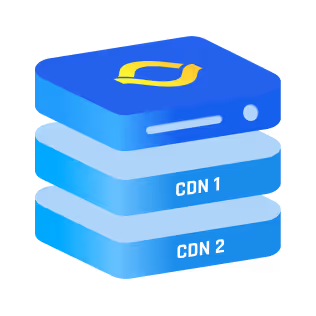
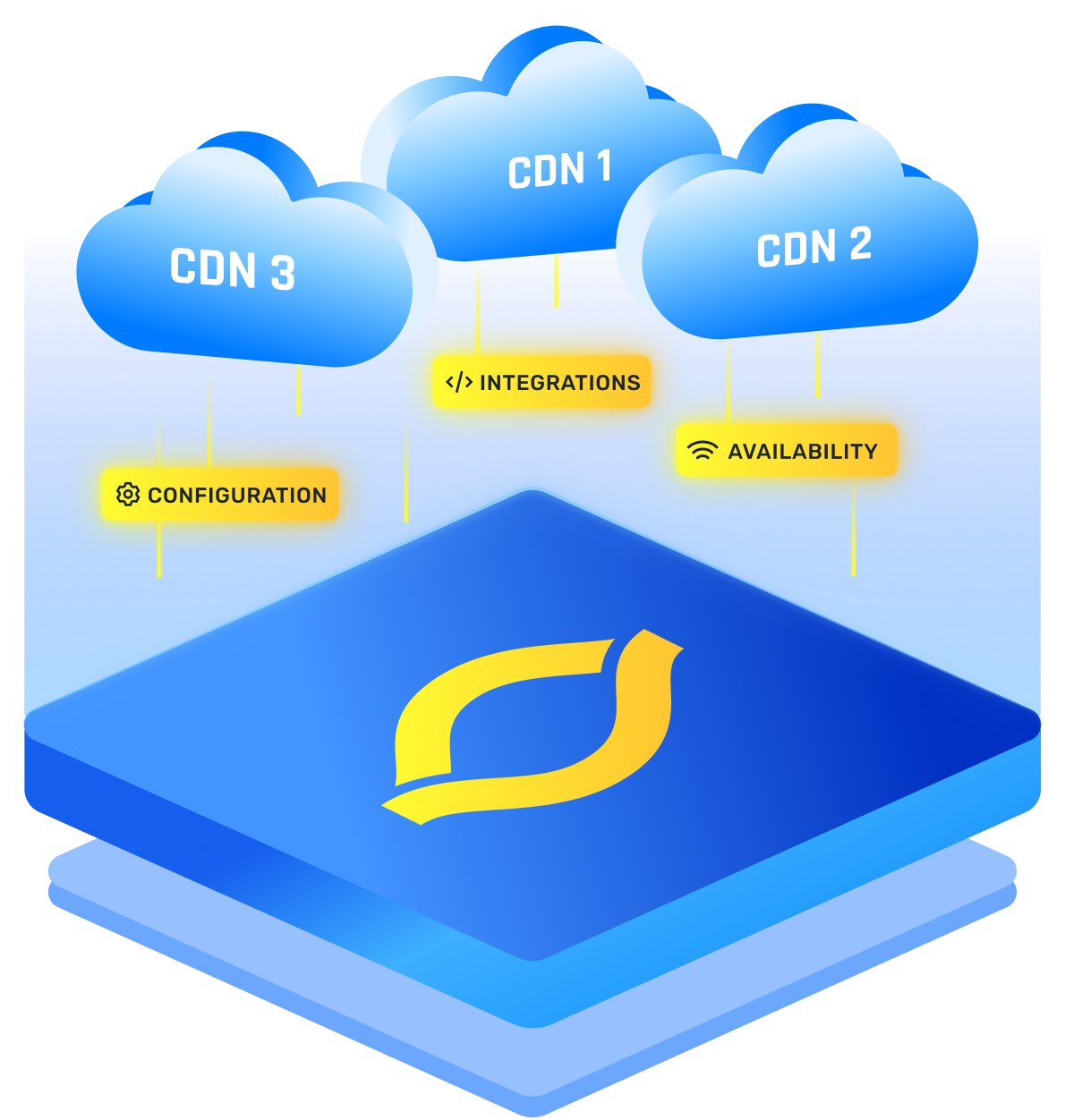
CDN multiple domains means using one content delivery network to serve and manage traffic for more than one domain name.
Instead of attaching a CDN to only one website, a business can place several domains behind the same CDN provider. Those domains may belong to the same brand, separate brands, country versions, customer environments, or different apps under one company.
A simple example looks like this:
Each one is a different CDN domain, but all of them can still run through the same CDN platform.
That is the basic idea. One CDN, many domains, each with its own rules, certificates, cache behavior, and origin setup if needed.
{{cool-component}}
Why Businesses Use A CDN For Multiple Domains
A single domain setup works fine until the business grows. Then the web stack starts to spread out.
A company might need several domains for branding, geography, product separation, or customer-facing services. Running each one with a completely separate delivery setup can become expensive, slow to manage, and harder to monitor.
Using CDN multiple domains helps in a few practical ways:
- It keeps performance tools in one place
- It makes security policies easier to manage
- It supports different websites under one provider
- It reduces repeated setup work
- It gives teams a clearer view of traffic across domains
This is especially useful for companies with global users or multi-brand operations. One domain may serve marketing pages, while another handles application traffic. Both still need caching, TLS, traffic routing, and protection.
That is why a CDN domain is not always just a website address in this context. It is often a delivery unit with its own behavior, rules, and role.
How A CDN Handles Multiple Domains
A CDN can support many domains because it does not treat traffic as one giant bucket. It reads the request, checks the hostname, and applies the right settings for that domain.
In simple terms, the process usually works like this:
- A user requests a domain such as images.brand.com
- DNS points that request to the CDN
- The CDN sees which hostname was requested
- It applies the matching certificate, cache rules, and origin rules
- The content is served from cache or pulled from the origin server
This means several domains can use the same CDN network without mixing up traffic. The CDN knows which request belongs to which hostname.
That separation matters because not every site behaves the same way. One domain may cache static images for days. Another may avoid caching account data entirely. A third may send traffic to a different origin based on geography or product line.
A clean CDN multiple domains setup depends on correct mapping. If the mapping is wrong, the CDN may send a request to the wrong origin, use the wrong certificate, or cache the wrong content. That is the sort of mistake that turns a small config problem into a very public one.
CDN Custom Domain Setup
A CDN custom domain is a domain name that has been connected to a CDN so traffic can flow through the CDN instead of going directly to the origin.
This matters because most businesses do not want users visiting a provider-owned hostname. They want traffic served through their own branded domain, such as static.company.com or app.company.com.
A proper CDN custom domain setup usually includes:
- Adding the domain inside the CDN platform
- Pointing DNS records to the CDN endpoint
- Verifying domain ownership
- Attaching the right TLS certificate
- Defining the origin server for that domain
- Applying cache and security rules
That sounds like a lot, but it is really about one idea. The CDN needs proof that the domain belongs there, and it needs instructions for what to do when traffic arrives.
A business may have one CDN custom domain or dozens of them. The number is less important than keeping each one mapped correctly.
Managing A CDN Domain List
Once several domains sit behind the same network, teams need a clear CDN domain list.
A CDN domain list is simply the set of domains configured inside the CDN account. But in practice, it becomes much more than a list. It is the map that shows which domains exist, where they point, which certificates they use, and which rules apply to each one.
A useful CDN domain list should help answer questions like these:
- Which domains are active
- Which origin belongs to each domain
- Which domains share the same app or backend
- Which certificates are attached
- Which domains are staging, production, or no longer used
This is where operations can either stay calm or fall apart politely in silence.
If the domain list is not maintained well, teams can lose track of stale entries, expired certificates, test domains left in production, or duplicate rules that no one meant to keep. A tidy CDN domain list saves time because it gives teams a clean picture of what is live and what is not.
Routing Rules Across CDN Multiple Domains
Not every domain behind a CDN should behave the same way.
One brand site may send traffic to a server in Europe. Another may send users to a different application stack in the United States. A media domain may use heavy caching, while a login domain may use strict security controls and very little caching at all.
That is why CDN multiple domains often relies on routing logic tied to the hostname.
A CDN can route based on:
- Domain name
- Path
- Country or region
- Device type
- Request headers
- Security rules
This gives teams flexibility without needing a totally separate CDN account for every project.
The main point is simple. Multiple domains can share one delivery network, but they do not need to share one behavior.
{{cool-component}}
CDN Domain Fronting And Why It Is Different
CDN domain fronting is not the same thing as ordinary multi-domain delivery.
In a normal setup, the visible domain, the TLS request details, and the destination all line up as expected. The CDN knows which domain was requested, and the request is handled according to that domain’s configuration.
CDN domain fronting refers to a mismatched request pattern where one domain appears in part of the connection, while another domain is used in the actual HTTP request. Historically, this could hide the true destination behind a different visible domain.
Conclusion
A CDN becomes more valuable when the web setup becomes less simple. That is exactly what happens as brands grow, products split into separate experiences, and different domains start serving different jobs. CDN multiple domains is what keeps the setup fast, useful, and a lot less dramatic than it could be.
FAQs
What Does CDN Multiple Domains Mean?
It means one CDN platform is used to serve more than one domain name. Each domain can have its own settings, origin, and caching rules.
Can One CDN Domain Point To A Different Origin Than Another?
Yes. One CDN domain can send traffic to one origin server, while another domain on the same CDN account can point somewhere else.
What Is A CDN Custom Domain?
A CDN custom domain is a branded domain connected to the CDN, such as cdn.company.com or media.company.com, instead of using a provider-owned hostname.
Why Is A CDN Domain List Important?
A CDN domain list helps teams track active domains, origin mappings, certificates, and delivery rules. Without it, multi-domain setups become harder to manage.
Is CDN Domain Fronting The Same As Hosting Multiple Domains On One CDN?
No. CDN domain fronting is a different request pattern involving mismatched domain details in the connection. It is not the same as a normal multi-domain CDN configuration.
Can CDN Multiple Domains Improve Performance?
Yes. A well-configured CDN multiple domains setup can improve speed, reduce origin load, and keep content delivery consistent across several websites or applications.


