

How to Build Your Own Multi-CDN Solution
Multi-CDN looks simple in slides. In production, it’s anything but. This guide breaks down how teams actually build and run Multi-CDN, without guesswork, hand-waving, or learning the hard way.

.png)
What can you achieve
with this playbook?
Clarity Before Commitment
Understand what Multi-CDN actually looks like in production, not just on an architecture slide.

Fewer Blind Spots
See how routing, observability, configuration, and cost management intersect across providers.

Realistic Planning
Learn what teams underestimate most, including operational overhead, API maintenance, and incident complexity.

What’s inside?
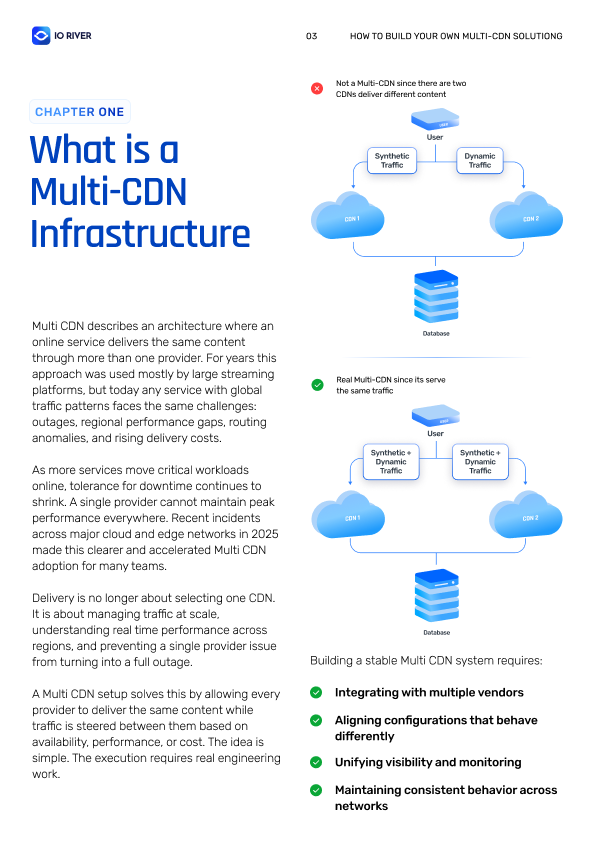
- What Multi-CDN really means in production environments
- The components required to build a production-grade Multi-CDN architecture
- Configuration alignment, API management, and cache behavior challenges
- The operational burden most teams don’t anticipate
- A practical framework for deciding whether to build or buy
Who is it for?
Get a clear picture of the systems, tooling, and ownership required to run Multi-CDN long-term.
Understand the operational realities of monitoring, incident response, and provider-level failures.
Use this guide to set realistic expectations around staffing, timelines, and ongoing investment.
Evaluate whether Multi-CDN fits your organization’s maturity and whether building internally makes sense.